
 Your Account
 Email Sign-Up
 Buy Annual Pass

12 Months of the Metroparks: May
5.6.2026
By Erin Parker, Interpretive Services Supervisor
May is a month of movement in the animal world in Michigan, and your Metroparks are a great place to celebrate all the wildlife activity!
Migration
Bird migration starts as a trickle in the late part of winter, picks up speed (and volume) in the early spring, and the full flood is upon us during the first two weeks of May. The timing of migration aligns with a huge influx of food resources here: insects hatching, buds breaking open, flowers blooming. Birds that spent the winter months in the tropics need all this food to resupply after their long journeys and to be able to feed their young.
These food resource needs can help interested human observers find their target birds during this busy season. The warblers, a group of tiny, colorful, active birds that are sought after by photographers and birdwatchers, are looking for food and shelter. They will be almost entirely eating insects, picking them from the air or off of leaves, buds, bark, and twigs. Warblers and other spring migrants can be found in shrub layers and deeper woods, where the lack of full leaf cover this time of year makes them slightly easier to find!
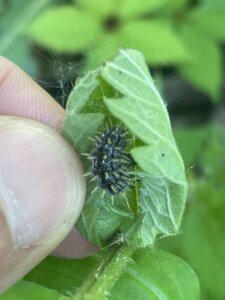
Parks like Lake St Clair, Oakwoods, and Kensington that have a variety of habitats can be great places to find and observe birds during migration season.
Nesting
While some of spring’s most beloved sights and songs are the long-distance migrators like warblers, there is plenty of more localized movement to hear, see, and watch out for in our parks and backyards.
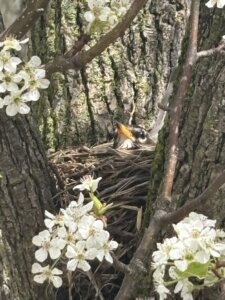
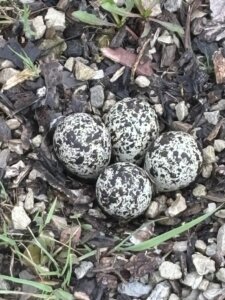
While songbirds generally do not reuse the same nest, many return to the same tree or porch light or similar spot year after year. Each bird creates a unique nest, and learning their habits can help you identify your bird neighbors.
Common nests in urban and suburban areas include:
American robin, with stick-and-mud nests that are a little on the messy side with grasses and twigs poking out. This combination, along with the turquoise-blue egg shells of their eggs, is easy to identify even at a distance.
Mourning doves barely make a nest, and they’re happy to nest in porch planters, grapevine arbors, and other human-created spaces. Their nests are loosely constructed of a few twigs, straw, pine needles, and are barely held together. The giveaway that you have doves nesting is the startled noise they make with their wings when they fly away!
Killdeer don’t even bother with twigs for their nests. These birds, in the sandpiper family, love gravel piles and driveways, athletic fields, parking lots, and sandy volleyball courts and beaches. They create a scrape, or shallow cup, and lay their beautifully camouflaged eggs there with no cover beyond the mother bird’s body. These birds, with their loud calls, will try to lure away predators and people who get too close by pretending to have an injured wing!
Please give nesting birds lots of space and quiet! Birds flying off their nest can cause them to lose their eggs or young due to cold, precipitation, or predators, and the bird itself wastes energy flying away.
Slow and steady
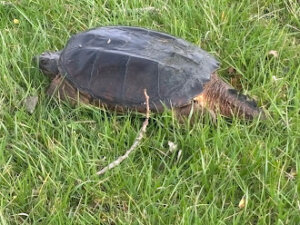
Michigan is home to ten species of turtles, and many can be found in your Metroparks, where they are particularly associated with wetlands and waterways. These cold-blooded creatures can most often be spotted basking on logs and other vegetation while they soak up the sun. But this time of year, turtles are also moving away from water to find mates and lay their eggs.
Unfortunately, turtle egg-laying season is also peak season for turtles searching for a nest site to be hit by cars. Slowing down, moving turtles out of the road (in the direction they were traveling) when it is safe to do so, and giving them space to lay their eggs are all important things that park visitors and area residents can do to support turtles. Many species have what scientists call high site fidelity, which means that they have an extremely localized area that they travel for overwintering, foraging for food, and nesting. In other words, they return year after year to the same places for all of these things, and humans can disrupt these behaviors by attempting to “rescue” turtles that aren’t near water or seeking help for turtles that are simply on the move.
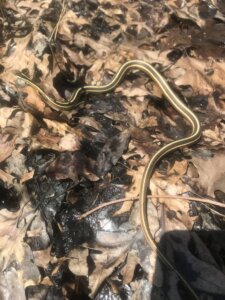
Snakes are also on the move this time of year for a variety of reasons. Michigan is home to 18 species of snakes, and these cold-blooded creatures also deserve our respect and attention. Like turtles, snakes can be found thermoregulating by using the sun to warm up their core temperatures. Snakes seem to readily use the warmth of pavement this time of year when ambient air temperatures can still be a little cool. Pedestrians, cyclists, and rollerbladers can help protect snakes by keeping an eye out for these sunbathers. Some species of snakes also migrate from winter habitat to summer habitat, so sharp-eyed visitors may see them moving from wetlands to uplands on warm and sunny days.
May is a spectacular season to get out and enjoy your Metroparks and to appreciate the wildlife that calls them home.
Programs and resources
Watching for Warblers Walk at Oakwoods Metropark – Sat., May 9, 8 a.m. $5 18+
Birding at Lake St Clair Metropark– Saturdays, multiple dates and topics, 10 a.m. $5 16+
Birding for Beginners at Kensington Metropark – Sat., May 30, 10 a.m., $5 adult/$3 child 12+
Birding for Beginners at Indian Springs Metropark – Sat., June 6, 10 a.m., $5 adult/ $3 child 10+
 YOUR ACCOUNT