
 Your Account
 Email Sign-Up
 Buy Annual Pass

12 Months of the Metroparks: April
4.1.2026
By Erin Parker, Interpretive Services Supervisor
April in the Metroparks brings us birds, blooms, and bugs and your Metroparks are a great place to experience spring phenomena!
Birdy return
While the peak of the migration season is still the first two weeks of May, signs of spring are everywhere in the bird world.
Our resident birds, those that live in southeast Michigan year-round, are singing their spring songs, seeking out mates, and some are even starting to nest. American robins, tufted titmice, and black-capped chickadees are all examples.
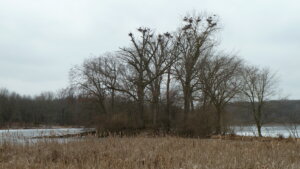
Short-distance migrants, birds that don’t travel long distances in the winter but follow food and water resources, are back and some are setting up their nests and getting settled in for the summer season. Check out the great-blue heron rookery, or colonial nesting site, at Kensington Nature Center where these tall birds nest in big, messy nests in the trees! They can be viewed from the boardwalk near the nature center parking lot.
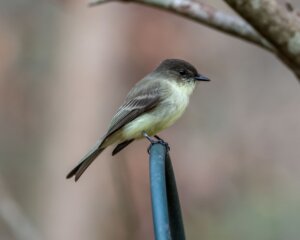
And even some of our long-distance migrants, birds that spend their winters on the Gulf Coast or even further south into Central and South America, will begin winging their way back in April. Look for tree swallows in open fields where they hunt for insects and nest in bluebird boxes. Eastern phoebes also return in April and can be found just about anywhere, giving their distinctly hoarse “Phoebee, phoebay” call. Put out your oranges and grape jelly for the orioles by late April. These vibrant birds stick around all summer but are easiest to see in late April and May.
April flowers
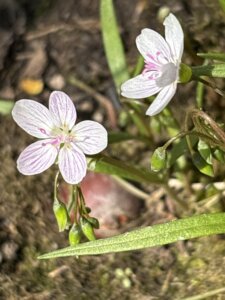
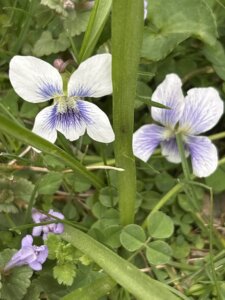
While spring’s arrival may feel slow and soggy, it is here. By the end of April, spring ephemerals bloom in the understory. Ephemeral plants are named for their ‘here-and-gone’ nature. These are small plants that take advantage of the early spring when the forest floor receives a lot of sunlight and before the tree canopy leafs out, blocking their view of the sun. Not only are these early flowers a welcome sight for humans enjoying park trails, but they also provide an important food source for a variety of insects including native bees and butterflies.
Take a stroll along any wooded trail and spring flowers should be in abundance. White-tailed deer also love these flowers, especially trilliums, and so the best viewing of these plants is on hillsides and other more challenging terrain where the deer can’t reach their favorite spring snacks!
Bugs, bugs, bugs
Human park visitors may not be looking forward to the spring emergence of insects, but they are a vital part of our ecosystems! Without insects, the songbirds wouldn’t be able to feed their young. In fact, the driver of spring migration is the explosion of food in the northern hemisphere, well-timed to songbird arrival and nesting season!
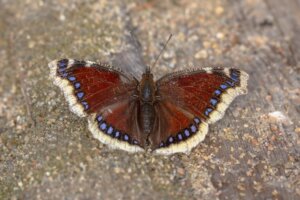
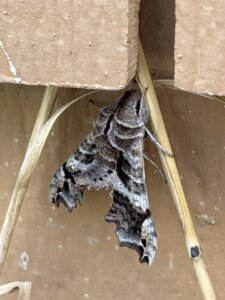
April brings us the first butterflies and moths of the season. In Michigan, few butterflies overwinter as adults (most are in egg or chrysalis form), but the mourning cloak is an exception. This woodland butterfly, identified by its dark brown wings edged in yellow, spends the winter under bark or other snug spot, and emerges in early spring. Moths, bees, bumblebees, ants, and beetles all start getting active in the woods. Many take advantage of the early spring wildflowers for food, so spend some time this spring observing the wild visitors to the flowers in the parks!
Your Metroparks have many opportunities for exploring and enjoying spring phenomena after this long winter!
Get out and explore spring events in your Metroparks:
Adult Nature Hike: Spring Ephemerals at Stony Creek Metropark – Sat, 4/4/2026 -10 a.m.
Signs of Spring hike at Lake Erie Metropark – Sat, 4/18.2026 – 10 a.m.
Early Blooms: Spring Wildflowers hike at Oakwoods Metropark – Sat, 4/18/2026 – 1 p.m
Family Nature Hike: Spring Ephemerals at Stony Creek Metropark- Sat, 4/25/2026 – 10 a.m.
Wild Michigan: Spring Songbirds at Lake St Clair Metropark – Sun, 4/26/2026- 1 p.m.
Great Blue Herons are Great at Kensington Nature Center – Sat, 5/2/2026 – 1 p.m.
 YOUR ACCOUNT