
 Your Account
 Email Sign-Up
 Buy Annual Pass

Stormwater Solutions: Being Salt Savvy
1.7.2026
By: Stephanie Kozak, Parks Interpreter
During the winter season, I often look out my windows and observe the wintry mix of snow, sleet, and rain hitting the garden beds, driveways, sidewalks, and streets. As this mix falls, residents and businesses throughout the area use large amounts of road salt to provide a safer commute along roads and walkways. When applied to ice and snow winter salts, made up of mostly sodium chloride, dissolve and cause the ice to melt by lowering the freezing point of water. But what happens to all this dissolved salt once the snow and ice melt?

Water from rain and snow is known as stormwater. This water flows over our streets, driveways, parking lots, and more, carrying with it anything that it encounters along its path to a local water body or storm drain. This means the road salt we use gets picked up and carried away in this stormwater runoff. Runoff containing winter salts has high chloride concentrations and can impact our pets and waterways, damage roads, landscaping, and household pipes, and contaminate groundwater and drinking water.
Did you know that Michigan was one of the first states to start using salt to help with winter roads? In the 1940s, Michigan began experimenting with using salt as a de-icer. With booming automobile production, expanded statewide highways, and access to local salt mines, it became clear that salt would help keep roads passable during winter. Since the 1940s, more and more road salt has been used each year. Increased urban sprawl means more roads, more infrastructure, a growing population, and more salt used to keep our community roads safe for travel.
As salt use on our paved surfaces increases, we are seeing a correlated rise of chloride concentrations in our streams, rivers, and lakes. Just one teaspoon of road salt can permanently pollute five gallons of water. Salt is considered a permanent pollutant because it is very difficult and costly to remove once it dissolves in water. High salt concentrations can lead to die-off of aquatic plant species, as many freshwater plants and animals cannot tolerate large quantities of chloride. Road salt can also kill grass, trees, and plants along our roadways. Roadside plants often have a “burned” look to them along the edges or bottom of the plant, often referred to as salt burn in the landscaping community. Over time, salt accumulation in soil can become so high that plants can no longer grow there.
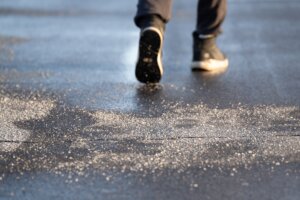
Salt is corrosive to our infrastructure as well. It causes damage to bridges, roads, vehicles, and walkways. Excess salt in drinking water can corrode metal pipes, and in some cases, we may even be able to taste the saltiness in our water. Unfortunately, given the large amount of paved surfaces our community must maintain, road salt remains the most efficient and economical way to de-ice and help to keep roads navigable during winter. At this time, the use of winter salt may be inevitable. So what can we do to help?
Proper application of winter salts can go a long way toward protecting our waterways. More salt does not equal more melting. Here are some tips to use salt effectively, without overdoing it.
- Shovel first and often. Early and frequent snow removal can reduce the need to salt.
- Keep downspouts and storm drains clear of leaves and debris to prevent clogging, which can lead to icy spots and puddling.
- Only use salt where it is necessary. Spread it evenly and sparingly, leaving about 3” in between pieces to reduce clumping.
- A 12-ounce coffee mug filled with rock salt is enough to cover a 20-foot driveway, 10 sidewalk squares, or 250 square feet.
- Once the ice melts, sweep up any leftover salt and save it to reuse. Pro-tip: if salt remains after the snow melts, you likely used too much.
- Try alternative methods. Salt stops working in temperatures lower than 15 degrees. Switch to sand for traction in colder temperatures, or try out a salt brine, which starts melting ice faster and uses significantly less salt. Learn how to make salt brine and use salt brine by watching this video from the Salt Smart Collaborative: https://youtu.be/uu94E1Tp1gE
Another way we can help is by reducing stormwater runoff from our properties. Less runoff means less salt being washed into our water systems. If we can collect stormwater before it reaches hard surfaces, we can also reduce the amount of salt needed on those surfaces. During winter, I often notice areas along my sidewalk and driveway where water from downspouts collects and creates icy patches. These are places where I would typically put salt down to help reduce the risk of injury. What if those downspouts were redirected away from pavement and allowed to drain elsewhere, such as into a rain garden?
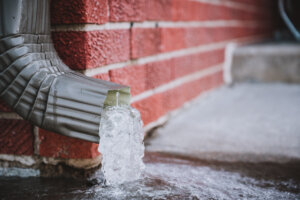
Winter is the perfect time to start brainstorming and planning for your spring and summer gardening projects. A rain garden is a planted basin that collects stormwater runoff from hard surfaces and allows it to slowly soak into the ground instead of overwhelming drains and waterways. Rain gardens can help reduce spring and fall flooding and winter icing issues, while also adding beauty, interest, and pollinator habitat to your yard. If you’re interested in learning more about how to add a rain garden to your space, join us for an upcoming Master Rain Gardener Course. Learn more at: https://www.hrwc.org/take-action/at-home/lawn-garden/registration/
Resources:
https://extension.umd.edu/resource/salt-or-fertilizer-damage-trees/
https://mwrd.org/community-action/go-easy-salt
https://saltsmart.org/residents/
https://mde.maryland.gov/programs/Water/319NonPointSource/Pages/411-on-Salt.aspx
 YOUR ACCOUNT