
 Your Account
 Email Sign-Up
 Buy Annual Pass

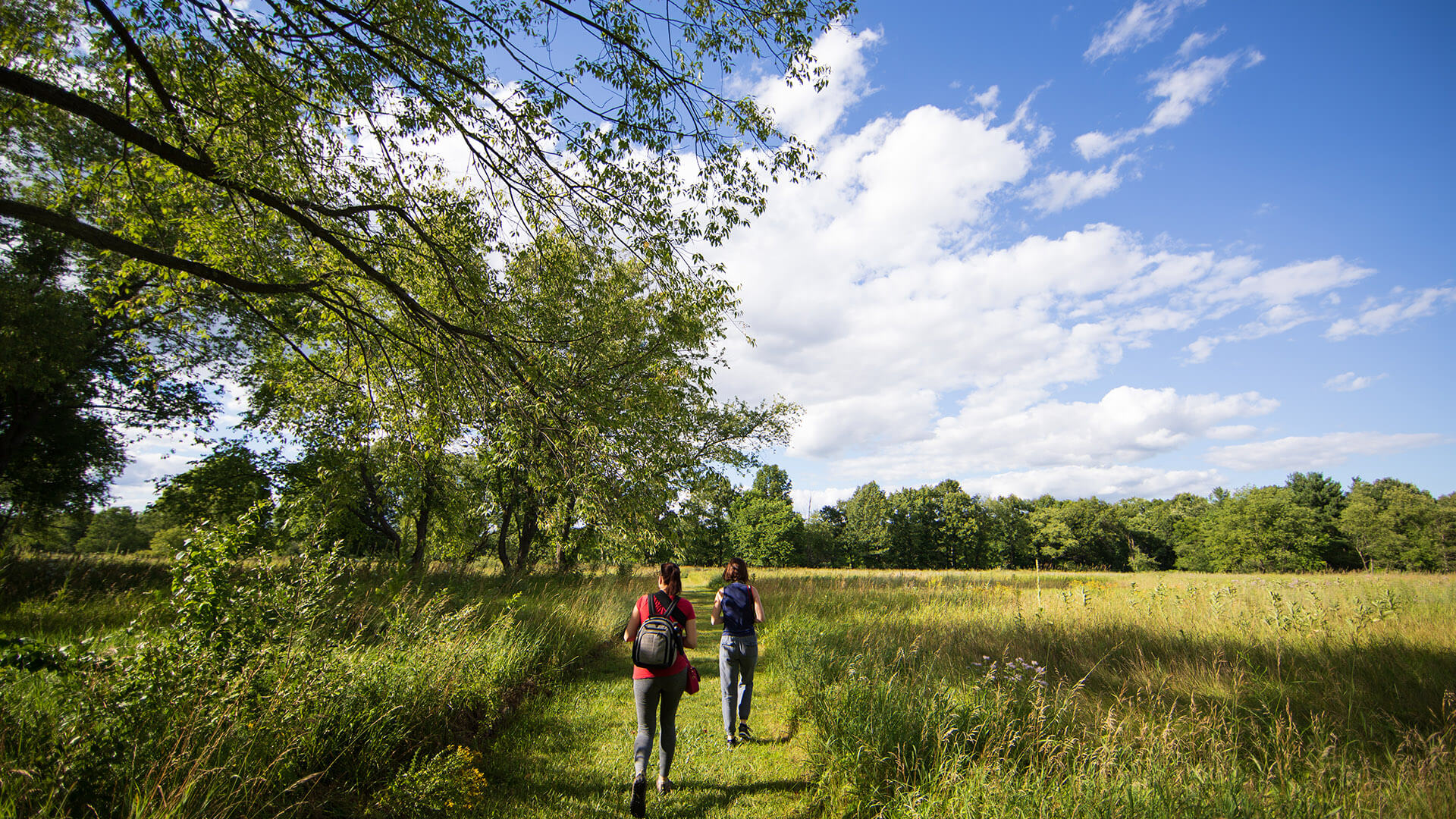
AND THEY’RE WORTH PROTECTING.
The Metroparks are home to a wide diversity of the plant life native to Southeast Michigan. Managing this ecosystem means safeguarding our natural resources from human activity as well as the impact of other plant and animal species.
NATURAL RESOURCES DEPARTMENT
With nearly 25,000 acres from across the five counties of Southeast Michigan, the Huron-Clinton Metroparks contain some of the largest and most diverse greenspaces accessible to the four million plus people who call this region home.
When you visit the Metroparks, you’ll find prairie, forest, lakeshore, wetlands and so much more. Not to mention the incredible array of wildlife and plants these natural habitats attract. The Metroparks offer nearly unlimited opportunity for hiking, fishing, birding, nature study, wildlife photography … just about any way there is to experience the natural world around us.
Our Natural Resources Department is responsible for overseeing and managing undeveloped land throughout the 13 Metroparks properties. Their mission: Protecting and restoring significant elements of natural diversity while balancing ecological stewardship with compatible recreational uses. Nature wins. You win. Everybody wins!
Of course, no two Metroparks are the same. How could they be? With different combinations of geography, habitat and microclimate at each of the Metropark properties, you’ll find unique species and one-of-a-kind experiences.
For instance, Lake Erie Metropark is home to remnants of the disappearing Great Lakes coastal marshes. Indian Springs hosts a healthy population of the rare Eastern Massasauga rattlesnake (yes, there are rattlesnakes in Michigan … keep your eye out for signs letting you know where you can and can’t step). And a population of mullein foxglove at Oakwoods is one of only two known in the state of Michigan.
Protecting these habitats is a full-time job. And more. The staff of the Metroparks Natural Resources Department – supported by volunteers who are generous with their time – safeguard these natural amenities so future generations of Metroparks visitors will be able to experience them, too.
DOCUMENTS & PLANS
- Mow Plan 2025
- 2022 – 2026 Deer Herd and Ecosystem Management Plan
The Metroparks remains focused on responsibly preserving wildlife and managing the ecosystems that sustain wildlife, including ensuring healthy, thriving deer herds, within our 13 unique parks. The Deer Herd and Ecosystem Management Plan at the Metroparks began in 1999 in response to an observed decline in the overall health of the deer herds and the loss of many species of native plants. At that time, third-party wildlife biologist experts completed health studies on the park deer populations and concluded that, “data indicates herd stress due to lack of nutrition.”
In early 2021, the Metroparks committed to conducting a comprehensive review of evolving research and best practices for managing white tailed deer populations and managing their corresponding ecosystems. As pledged, that review was completed, and the data was used to guide ongoing ecosystem management and deer herd management strategies. From that review the Metroparks Deer Herd and Ecosystem Management Plan has been updated and was approved by Metroparks Board of Commissioners on December 9, 2021.
Goose Management at the Metroparks
Canada geese are a natural part of the Metroparks, but large concentrations of geese in beaches, picnic areas and other popular recreation spaces can create challenges for park visitors, water quality and park operations. To help manage goose activity in these high-use areas, the Metroparks works with Goose Busters, a professional goose management service that uses specially trained border collies and experienced handlers to safely encourage geese to move to more natural areas of the park.
During your visit, you may see these working dogs actively moving geese from an area. The dogs work under the direction of their handlers and may be off leash while performing their job. They do not make contact with the geese and are trained to pursue geese only when directed by their handler.
Learn more about the program and what you can expect when Goose Busters is working in your Metropark.
What is the purpose of this program?
Once considered a threatened species, Canada Goose populations in Michigan have gone from about 9,000 birds in 1970 to over 300,000 present day. Approximately 78% of these birds are estimated to be living in southeast Michigan.
Geese may be aggressive to park patrons and their children or pets, especially when preparing to nest or lay eggs. A single goose eats about four pounds of grass per day and produces about three pounds of waste daily. With several hundred geese present at an individual Metropark, there is an impact on our lakes, beachfront, recreation and picnic areas. It is the goal of this program to reduce the number of geese in the public-use areas of the park by persuading geese to leave these areas for the marshlands and other more natural habitats.
What do the dogs do?
These highly trained border collies safely move the geese out of recreation areas by simulating a predator. There is no contact between the dogs and the geese. Each dog is handled by an experienced trainer who works with them as a team to drive geese out of an area. The dogs do not bark, but rather work with stealth, speed, and to imitate a predator.
Dogs will not interfere with park patron’s activities or their pets and will be clearly identified as a working dog by wearing a vest. When geese are unable to fly due to molting, or if geese are immature or injured, the dogs are not allowed to pursue them. The experienced handler uses the dog as a tool; the dog is never left to run wild after geese.
What else has the Metroparks done to control geese populations?
In addition to this new method, Metroparks Natural Resources staff has been engaged in a goose management program for over a decade. Previous methods used are discouraging nesting geese through egg collection and nest destruction, harassing geese with noisemakers, and posting silhouettes of predators. Even with these time-consuming and expensive activities, geese populations in the park have only risen. Natural Resources staff believe that continuing these activities with the addition of using trained dogs will improve the health of the beaches and water.
Will there still be geese in the park?
Yes, geese will still be present in many areas of the park, however we will attempt to encourage them to leave recreation areas for more natural areas.
What effect will this have on native/sensitive birds (or other sensitive species/areas/etc.)?
The dogs are trained only to pursue geese when ordered. They will not interfere with other animals or birds at the park. The dogs will work almost exclusively in public areas.
Is this safe for the dogs?
Yes. Experienced handlers ensure the safety of the dog and will not send dogs into areas deemed unsafe.
How effective is this program?
This program began in 2018 at Lake St. Clair Metropark and has since expanded to include Stony Creek, Kensington, Dexter-Huron, Delhi, and Lake Erie Metroparks.
How often will I see the dogs at the park?
The dog and handler will be present at one Metropark almost every day in spring, summer, and fall, at varying times of day.
Why are these dogs not on leashes?
These dogs are working animals which need to be off leash to perform their job. When they are not performing their job duties, these dogs will be on a leash while moving around the park.
Which specific park area will the dogs be working in? Will these dogs be kept out of natural areas (i.e. trails and the Nature Center)?
The dogs will be working primarily in open recreation areas and along the water’s edge. Dogs will not be in the marsh or other natural areas and will be kept away from events and gatherings of patrons. The dogs will go wherever the geese congregate but will avoid trails and other high traffic areas whenever able.
Who do I contact if I have more questions about this dog program?
Please contact the Metroparks Natural Resources Department at 810-494-6019 for more information.
PFOS Do Not Eat Advisory FAQ
On Saturday August 4, The Michigan Department of Health and Human Services (DHHS) issued a “Do Not Eat” advisory (https://www.michigan.gov/mdhhs/0,5885,7-339–474469–,00.html) for multiple sites along the Huron River in Oakland, Livingston, and Washtenaw counties. This advisory is for all fish between the Huron River at Milford to the Huron River at Base Line and Portage Lakes. This includes Metroparks properties at Kensington and Huron Meadows Metropark. Until further notice, fish caught in these parks should not be consumed. To respond to this advisory, our Metroparks Natural Resources Department has compiled the following questions and answers:
What caused the “Do Not Eat” advisory for fish in these bodies of water?
Fish tissue samples from Kent Lake were found to contain elevated levels of Perfluorooctane sulfonate (PFOS), an industrial chemical used in waterproofing various consumer goods and a component in firefighting foam.
Which fish species are subject to the “Do Not Eat” advisory?
All fish species are subject to the advisory.
How does this advisory effect water-based recreation at the Metroparks?
It is safe to interact and handle fish caught from these waters, as long as they are not consumed. There is no concern with paddling, boating, swimming, or otherwise being in the water. Swimmers should avoid swallowing excessive amounts of water but are not in danger of absorbing PFOS through skin contact with the water.
What is the Metroparks doing to address this issue?
Our Metroparks Natural Resources Department is working with the Michigan DNR, Department of Environmental Quality (DEQ), and DHHS to better understand the events that led to the advisory, and what steps need to be taken to begin to address the problem.
Where can I get more information on the “Do Not Eat” advisory or PFOS contamination?
To learn more about PFOS and related chemical contamination in Michigan waters, visit: https://www.michigan.gov/pfasresponse. To learn more about eat safe fish guidelines and chemical contamination in fish, visit: https://www.michigan.gov/eatsafefish
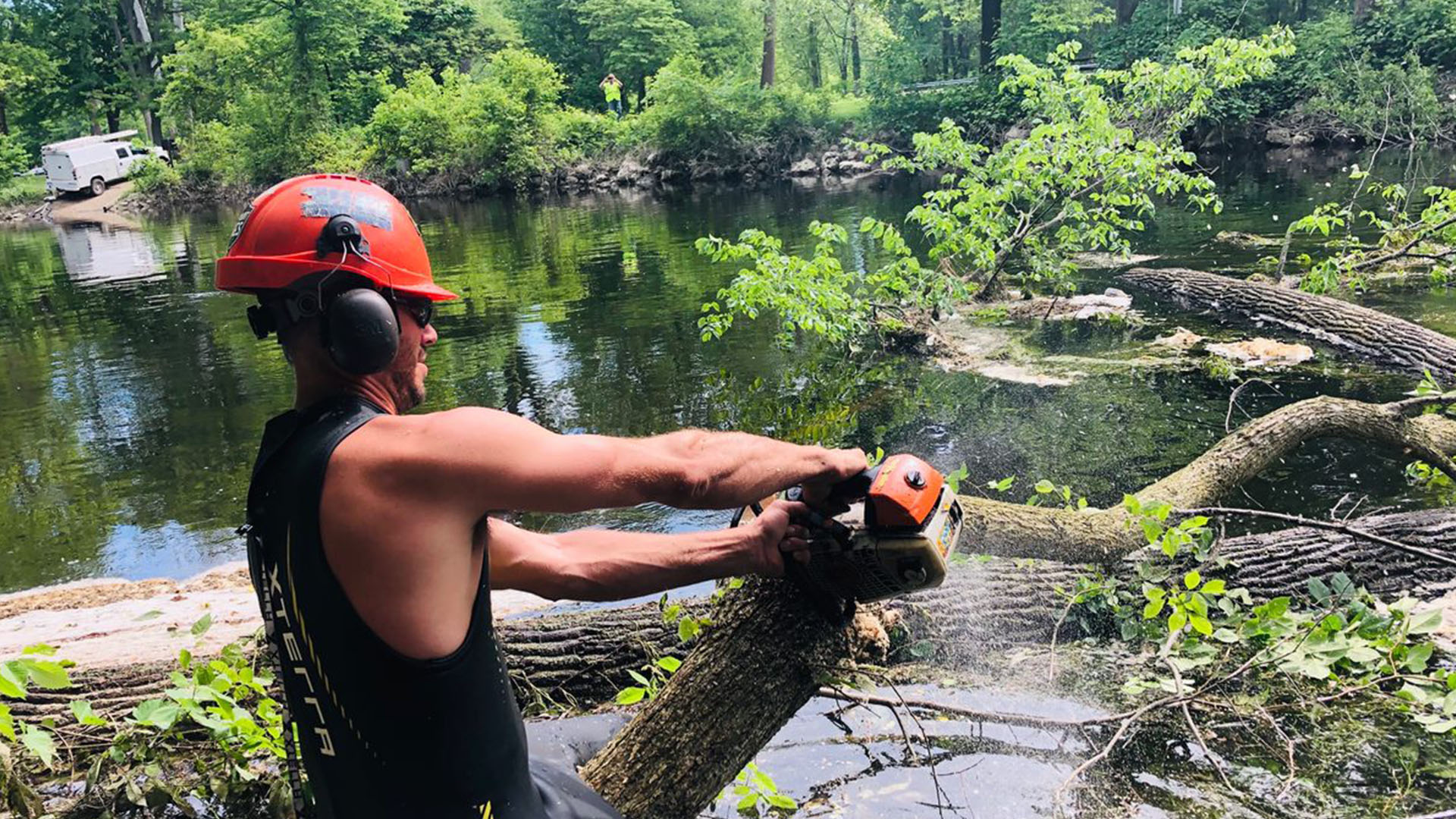
INVASIVE SPECIES
Quick question: All plants are equally valuable for a Metropark, yes or no? If you said yes, you’ve never met an invasive species before.
Invasive species? What’s that? We’re glad you asked, because this is one of the most easily misunderstood aspects of managing the Metroparks.
An invasive species is one that A) does not naturally occur in a specific area AND that B) can cause harm if/when it gets introduced to that area.
An invasive species can crowd out (and kill) existing native species; it can consume resources that would otherwise go to those existing species; it can cause very expensive damage to the ecosystem it has invaded. There are many ways invasive species can cause harm.
Keep in mind, invasive species can include both plant and animal species. They are often introduced to the area by humans – sometimes unintentionally, other times on purpose. But they’re not inherently “bad” species. They may just be in the wrong place. What typically happens is an invasive species enters a habitat where it doesn’t have natural controls. This allows that species to spread rapidly and outcompete native species for resources like sunlight and water.
Invasive species represent some of the most serious threats to biodiversity and ecological health, in the Metroparks’ natural areas as well as the world beyond. In fact, after habitat destruction, invasive species are the second-leading cause of global species extinction.
Facts About Invasive Species
- They can form dense thickets that shade out native plants and prevent them from growing.
- They can prevent native plants from growing by releasing chemicals that poison them or disrupt their nutrient uptake.
- They can completely replace native vegetation, changing the ecosystem and causing wildlife to migrate away in search of a more favorable habitat.
- They can cause changes to the soil microbial community, disrupting decomposition and nitrogen fixation, which is essential for plant growth.
- They can fix too much nitrogen into the soil, which can lead to increased leaching of nitrogen into aquatic ecosystems.
- They can change soil pH, which affects the ability of native plants to take up nutrients.
- They can change soil nitrogen content, causing the litter layer on the forest floor to decompose faster and exposing bare soil that can be eroded away.
- Invasive vines can kill mature trees by girdling (strangling) them, preventing light from reaching their leaves or bringing them down under the weight of the vine.
- Some invasive plants hybridize with native plants, threatening the genetic survival of the native plant.
- In densely invaded areas, wildlife may browse more heavily on native plants, reducing their supply of food as well as the native plant population.
- Some invasive plants use chemical signals to “trick” insects into laying eggs on them instead of on native species, which leads to greater mortality of the young insects.
What can we do about invasive species? That depends.
Some invasive plants can be controlled by physical removal – pulling, cutting, mowing or even prescribed burning. For instance, invasive shrubs that colonize an old field can be controlled by periodic mowing with a brush hog. And garlic mustard, an invasive woodland forb (“forb” means it’s a herbaceous plant other than grass), is controlled by hand pulling it during spring and early summer.
Herbicides can also be used to control invasive plants that do not respond well to physical removal. Or they can be used in combination with those methods.
Localized applications involve applying a small amount of herbicide to a specific part of the plant. One type of localized application, cut stump treatment, is frequently used for controlling invasive shrubs such as buckthorn, honeysuckle and autumn olive. Foliar applications with a backpack or boom sprayer are more appropriate for controlling large or dense patches of invasive vegetation, such as extensive stands of oriental bittersweet, spotted knapweed or Phragmites.
It’s important to know that chemical control always must be implemented in such a way as to minimize potential impact to native species and, of course, human health.
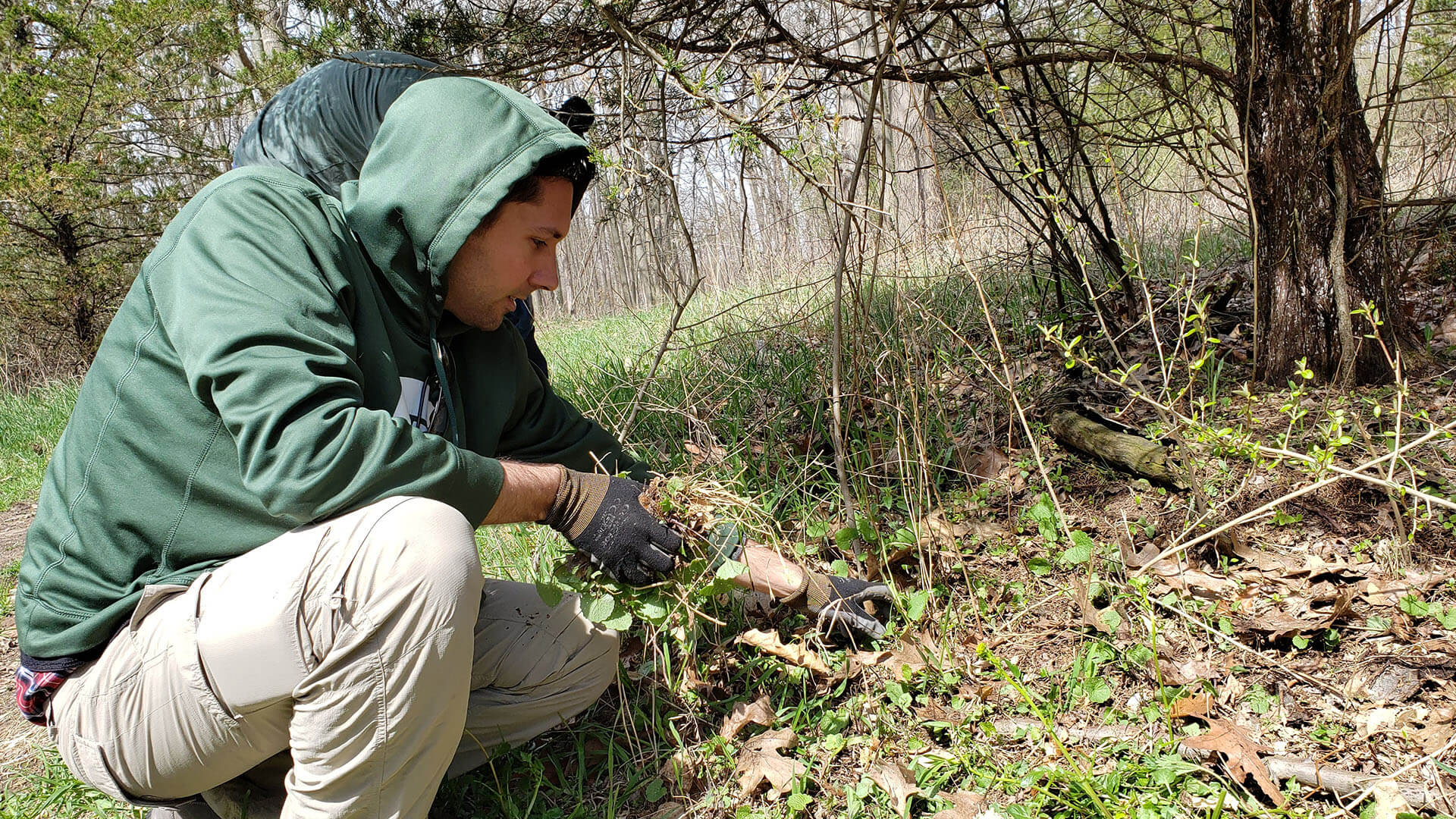
ECOSYSTEM MANAGEMENT
When it comes to protecting the natural resources here at the Metroparks, it’s important to keep an eye on the big picture. That means remembering any given plot of natural habitat is home to many and diverse species. Thinking in terms of the entire ecosystem – rather than just a single species – is a vital part of our stewardship over the greenspaces in our care.
Ecosystem management – that’s what we call it – allows our Natural Resources staff to play an important role in maintaining and restoring Michigan’s natural habitats for vegetation, wildlife and, yes, people.
Many natural areas within the Metroparks have been degraded as a result of large-scale changes such as intensive land use, fire suppression and the introduction of exotic species. These ecosystems require active management by humans to restore their ecological health and to ensure their sustainability into the future.
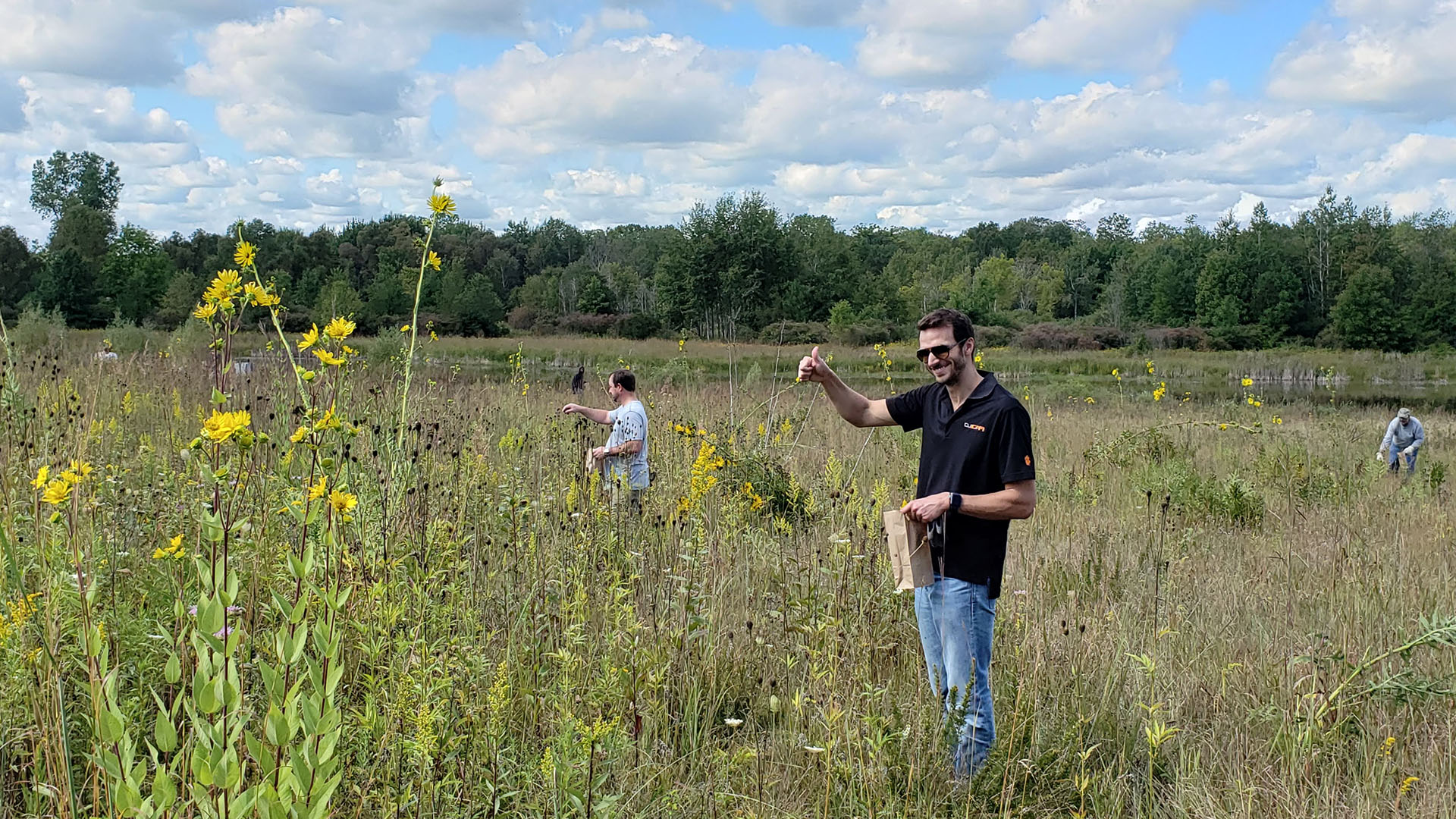
In order to manage our natural areas, we collect information on plants, animals and other natural features from ecosystems throughout the 13 Metroparks. Natural areas are then prioritized based on ecological quality, restoration feasibility and other factors.
Depending on specific goals, several strategies to restore a given ecosystem can be used. These can include invasive species removal, prescribed burning, reintroducing native plants and other tactics. While much of the hard work is done at the beginning of the restoration process, ecosystem management is an ongoing process that can take years – or even decades – to be successful.
 YOUR ACCOUNT